A Shared Table with Different Preferences
Plan a shared meal for different food preferences with clear dish descriptions and flexible components, so guests can choose comfortably without a separate menu.
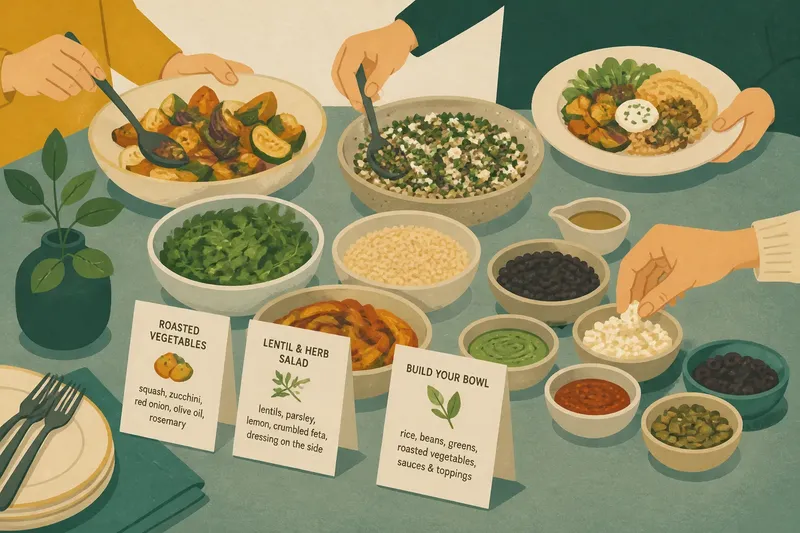
A shared meal works better when guests can see what each dish contains and choose how to combine the parts. Planning for different food preferences does not require a separate menu for every person; it calls for clear descriptions and a thoughtful mix of components.
That mix can take several forms. You might serve a set of dishes for everyone to pass, build-your-own plates from separate components, or use a hybrid approach with a central dish and a few distinct sides. The best fit depends on how much choice guests need, how the food is served, and whether anyone has a dietary restriction that requires particular care.
Choose a format that makes choice easy
Shared dishes suit a group with broadly compatible preferences and a relaxed meal where passing bowls feels natural. Put dishes such as roasted vegetables, bread, a grain salad, and a main on the table with serving utensils. Guests can take what appeals, while the meal still feels like one coordinated menu.
The limitation is that a dish may combine ingredients a guest would otherwise choose separately. A salad tossed with cheese, for example, cannot easily serve someone avoiding dairy. Keep some components separate when a small adjustment makes a meaningful difference, rather than assuming every guest can pick around an ingredient.
Build-your-own plates suit groups with more varied tastes or a meal whose components naturally work in different combinations. A grain bowl might offer rice, beans, roasted vegetables, greens, sauce, and toppings in separate dishes. Guests decide what belongs on their plate, and the host can describe each item without interpreting anyone’s preferences for them.
This format needs enough space for serving dishes and can feel less cohesive if the options do not share a clear theme. Choose a base, a few substantial components, and a small number of sauces or toppings rather than setting out every possible addition.
A hybrid meal suits a host who wants one clear centerpiece while leaving room for variation. Serve a central dish alongside separate sides or garnishes: for instance, a vegetable tart with a green salad, plain roasted potatoes, and sauces served on the side. The centerpiece gives the meal a focal point; the accompanying choices help guests shape a plate that suits them.
Write descriptions that answer the useful questions
A dish name can set a mood, but it may not tell a guest what they need to know. “Garden bowl” says little about whether it contains beans, cheese, nuts, or a dressing with anchovy. Pair inviting names with a short, plain description of the ingredients and preparation.
Useful descriptions mention the parts guests are likely to ask about: the main ingredients, a distinctive flavor, and any component served separately. “Lentil salad with parsley, lemon, and crumbled feta; dressing on the side” is more informative than “bright Mediterranean salad.” The description need not list every seasoning; its job is to help someone decide whether to ask more or take a serving.
Be especially precise with terms that can mean different things. “Spicy” might mean black pepper, fresh chile, or a sauce with lingering heat. “Smoky” could describe a cooking method or an added flavoring. Name the ingredient or describe the taste plainly when that distinction matters.
Keep components separate when it changes the choice
Separation is useful when it gives guests a real option, not as a rule that every ingredient must sit in its own bowl. Put a dressing, chile oil, grated cheese, or crunchy topping on the side if people may want to add it selectively. Keep a mild base intact so guests can season their own portions.
Say you are serving a pasta salad to friends with different preferences, and the starting point is a single bowl already mixed with olives, feta, and a sharp vinaigrette. You could instead serve plain pasta with chopped vegetables and dressing alongside, then offer feta and olives in small bowls. The expected result is a meal where guests can choose a combination more comfortably, while the host still prepares one coordinated set of ingredients.
Separate serving dishes are not a substitute for asking about serious dietary needs. If an ingredient must be avoided, clarify what the guest needs and how the meal is prepared. For restrictions involving allergies, illness, or other health concerns, ask the guest what precautions are appropriate and consult a qualified professional when needed.
How should you decide between the formats?
When are shared dishes the better choice?
Choose shared dishes when guests are comfortable with a common menu and the dishes can be served without hiding ingredients. This works well for a relaxed spread with several naturally distinct options.
When should you make plates customizable?
Use a build-your-own format when guests differ in how much they eat, which flavors they enjoy, or how they combine foods. It is most effective when the components make sense together and the table has room for them.
How can you describe a dish without listing everything?
Name the main ingredients, the dominant flavor, and any addition served separately. If a guest needs more detail, answer directly rather than relying on broad labels such as “light,” “clean,” or “mild.”
What if someone has a dietary restriction?
Ask what the guest needs before settling the menu, then explain ingredients and preparation honestly. Do not assume that removing a visible ingredient addresses the restriction; follow the guest’s guidance and seek qualified advice for health-related concerns.
Use the table itself to make choices visible
Place serving utensils with their dishes and keep sauces or toppings close to the foods they accompany. Small cards can name a dish and its main ingredients, which is helpful when a host is busy greeting people. If a label needs more explanation, make sure someone present can answer questions.
A simple layout also prevents one option from being mistaken for another. Put a vegetarian main in its own serving dish, rather than beside meat in a way that makes the boundary unclear. Keep shared utensils with the corresponding food, and avoid describing a dish as suitable for a particular need unless you have checked its ingredients and preparation.
The best shared-table plan is the one that matches the group. Choose shared dishes for an easy common spread, customizable components for visible choice, or a hybrid when you want both a centerpiece and flexibility. Clear descriptions do much of the quiet work: they let guests make informed choices without turning dinner into a negotiation over every bite.