Fresh, Frozen or Tinned Tomatoes for the Job
Fresh, frozen or tinned tomatoes suit different kitchen jobs. Compare their texture, preparation and cooking behavior to choose the right format.
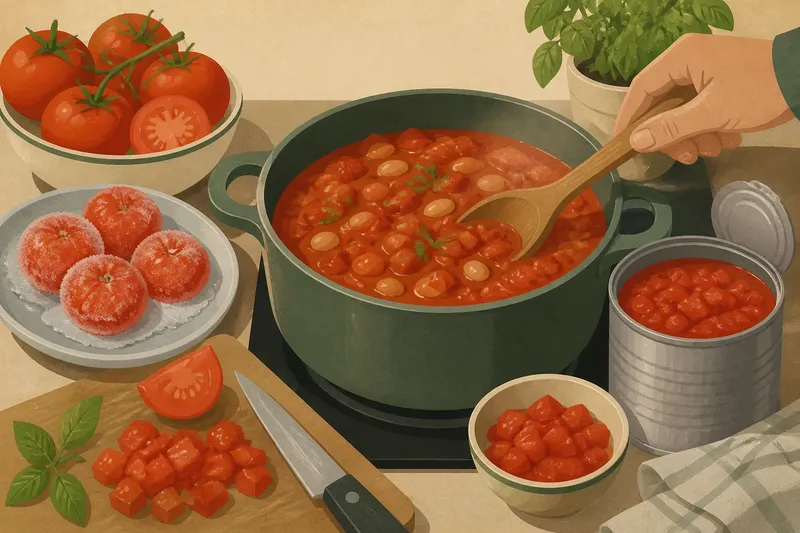
Fresh, frozen or tinned tomatoes can behave very differently in the same recipe, even when they bring a similar tomato flavor. The useful question is not which format is best, but what the dish needs: pieces that hold their shape, a soft base, or a smooth sauce.
Start with the texture the dish needs
A tomato’s format affects how much structure it has when it reaches the pan. Fresh tomatoes arrive whole, with skin, seeds, and flesh intact. Frozen tomatoes have been exposed to freezing, which disrupts their cells; after thawing, they tend to release more liquid and soften. Tinned tomatoes are already peeled or chopped and packed with juice, so they start closer to a cooked-down or simmer-ready state, depending on the product.
That distinction matters more than a simple ranking of freshness. A salad needs tomatoes that can be sliced and eaten with some firmness. A long-simmered sauce benefits from fruit that will break down without much effort. A quick pan dish may need tomatoes that release enough juice to coat other ingredients, but not so much that the result becomes watery.
Fresh tomatoes keep their shape for raw dishes
For salads, sandwiches, and toppings added just before serving, fresh tomatoes are usually the easiest choice because they can be selected and cut to suit the dish. A firm tomato makes neat slices; a ripe, softer one gives a juicier bite but can slump under a heavy dressing or inside a sandwich.
Fresh tomatoes also offer control over the cut. Dice them small for a quick salsa, wedge them beside grilled food, or leave small cherry tomatoes whole for roasting. Their skins remain part of the texture unless you remove them, and their seeds and juice can be useful in a salad dressing or an unwanted source of extra moisture in a filled sandwich.
Season and variety can affect flavor and texture, but a simple check helps: choose tomatoes that feel appropriately firm for the intended cut and smell pleasantly tomato-like near the stem. If the dish will be cooked for a long time, appearance matters less than it does in a raw preparation.
Frozen tomatoes suit dishes that welcome softness
Freezing makes tomato flesh softer once it thaws, so frozen tomatoes are less suited to clean slices or a crisp-looking garnish. They can be convenient for soups, stews, sauces, and braises, where the fruit is expected to collapse into the liquid. Depending on how they were frozen, they may be whole, chopped, or puréed.
Thawing often releases liquid. For a soup or stew, that liquid can go into the pot along with the tomatoes. For a thicker sauce, drain some of it or allow extra simmering time so moisture can evaporate. The choice depends on whether the recipe needs a loose broth or a concentrated tomato base.
Frozen tomatoes can also be useful when a recipe calls for peeled tomatoes: as the fruit thaws, the skins may loosen and become easier to remove. This is a practical option for cooking, not a way to preserve fresh tomato texture. Check the package for any added ingredients and follow its handling directions.
Tinned tomatoes offer a ready-made cooking base
Tinned tomatoes are convenient when a recipe needs a consistent supply of tomato flesh and juice without washing, coring, or peeling fresh fruit. Whole peeled tomatoes can be crushed by hand or with a spoon, leaving a varied texture. Chopped tomatoes are ready for a chunkier sauce or stew, while passata is strained and smooth, making it useful for soups and sauces where seeds and pieces are unwelcome.
The liquid in the tin is part of the ingredient. Add the contents as a whole when the dish can accommodate that moisture; drain some if the recipe needs firmer pieces. For a smooth sauce made from whole or chopped tomatoes, break them down during cooking with a wooden spoon or pulse them briefly with an immersion blender.
Products differ in whether they include salt, herbs, or other additions, so check the label when those details matter to the recipe. If the right choice depends on product handling or storage, follow the package directions.
Match the tomato format to the cooking job
- For raw slices or wedges: choose fresh tomatoes with enough firmness to hold the shape you want.
- For a quick salsa or topping: use fresh tomatoes and remove excess juice if the mixture should stay thick.
- For a smooth sauce: use passata, or cook tinned whole or chopped tomatoes and blend them.
- For soup or stew: use tinned tomatoes for a ready-to-add base, or frozen tomatoes when softness and released liquid suit the pot.
- For a dish with distinct tomato pieces: use fresh tomatoes added late, or tinned whole tomatoes broken into larger pieces; avoid relying on thawed frozen fruit to stay firm.
Imagine you are making a quick bean stew and have fresh tomatoes, frozen whole tomatoes, and a tin of chopped tomatoes. If you want the tomato to dissolve into the broth, the frozen fruit can go in with its thawing liquid and simmer until soft. If you want a more predictable, ready-to-stir base, use the tin and adjust the broth as it cooks; save the fresh tomatoes for a topping added at the end.
How should you choose tomatoes for a recipe?
Can fresh tomatoes replace tinned tomatoes in sauce?
Yes, but fresh tomatoes may release a different amount of liquid and take longer to soften. Chop them, then simmer until their texture and moisture suit the sauce.
Are frozen tomatoes useful outside soup?
They can work in cooked sauces, braises, and stews where soft fruit is welcome. Their thawed texture makes them a poor fit for salads or any dish that depends on firm slices.
Should tinned tomatoes be drained before cooking?
Usually, keep the juice if the dish needs liquid or will simmer long enough to thicken. Drain some when you need the tomato pieces without all the packing liquid.
Which format is best for roasting?
Fresh tomatoes are the straightforward choice if you want pieces that roast while retaining some shape. Tinned tomatoes can be roasted as a saucier preparation, but they begin with more moisture.
Let the finished texture make the decision
Choosing fresh, frozen or tinned tomatoes becomes simpler when you picture the finished dish rather than focus on the package alone. Ask whether you want intact pieces, a soft contribution to a liquid, or a ready-made base, then account for how much moisture the recipe can absorb. That small adjustment—especially when using thawed or tinned tomatoes—often matters more than swapping formats in search of a single best option.