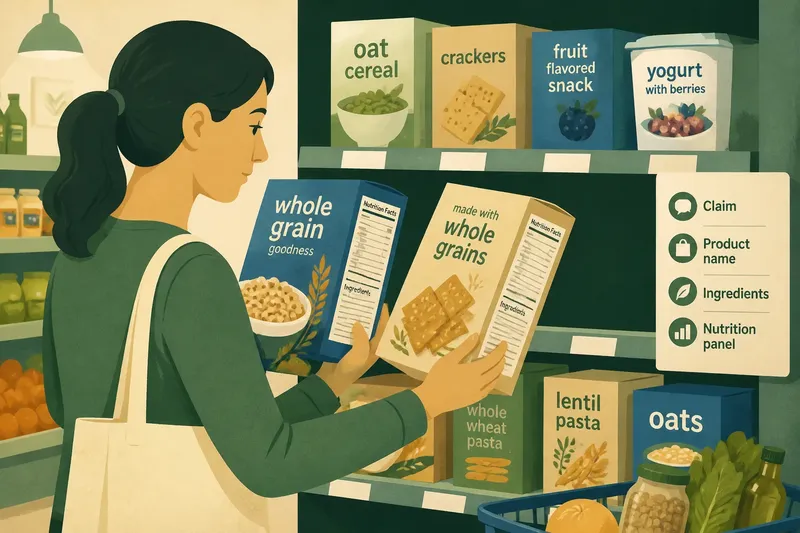
The Many Meanings of the Word Natural
Learn how to read natural on food labels by separating ingredient, flavor, and sourcing claims from the precise details that shape a buying choice.
“Natural” can describe a food’s ingredients, its flavoring, or the story on its package, so the word alone does not tell you exactly what you are buying. Reading natural on a food label means identifying what the claim refers to, then checking the ingredient list and any more specific wording beside it.
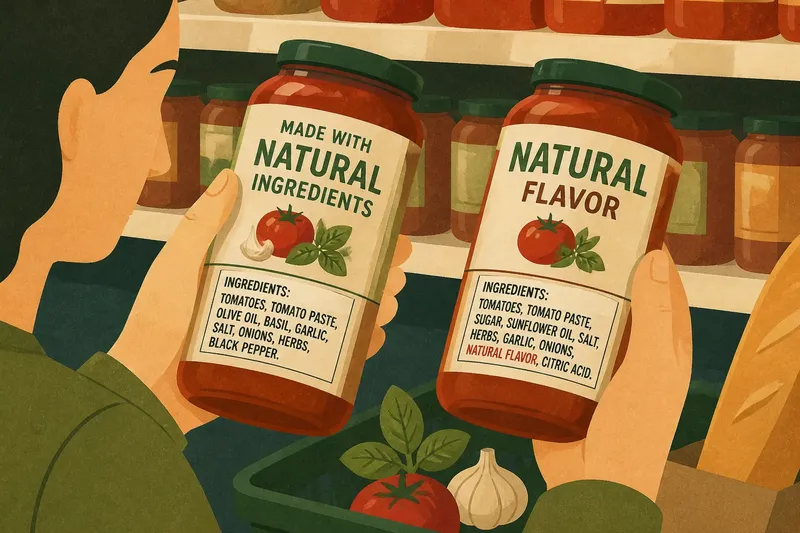
That distinction matters because natural sounds like a single, reassuring promise, while food labels may use it in several different ways. Imagine a shopper comparing two jars of pasta sauce at a neighborhood grocery store. One says “made with natural ingredients”; the other says “natural flavor.” The shopper wants a sauce with a familiar tomato-and-herb taste, but the shared word does not establish that the jars have the same ingredients, production methods, or sourcing.
This invented situation offers a useful way to see how the meaning shifts. The shopper’s task is not to decide whether natural is good or bad. It is to work out what each package is actually claiming, what it leaves unspecified, and which details matter for this particular purchase.
Natural can refer to different parts of a food description
On a package, natural may modify the food itself, a particular ingredient, a flavor, or a broader description of how something was made. The grammatical placement can offer a clue, but it is not a complete definition. A phrase such as “natural tomato sauce” leaves more open than a phrase naming tomatoes, basil, and olive oil.
Consider three kinds of wording the shopper might encounter:
- A claim about the product: “Natural pasta sauce” appears to describe the jar as a whole, but does not by itself list what is inside.
- A claim about an ingredient: “Made with natural ingredients” says something about ingredients, but does not identify every ingredient or explain what natural means in that sentence.
- A flavor description: “Natural flavor” identifies a type of flavoring term, not necessarily a whole-food ingredient such as fresh basil or roasted tomato.
These phrases are not interchangeable. Nor does the word, by itself, establish that a food is organic, locally grown, minimally processed, additive-free, or produced without a particular agricultural method. Those are separate questions, and a shopper needs separate evidence for them.
Natural food labels need to be read in their setting
The significance of a natural claim depends partly on where it appears and what it modifies. A prominent phrase on the front can summarize a product in broad terms; the ingredient list on the back names components in a more specific way. The contrast is not that one side is necessarily truthful and the other misleading. They serve different purposes, and the details on the package give the shopper more to interpret.
For the pasta-sauce shopper, “natural” might be the largest phrase on a jar, while the ingredient panel lists tomatoes, tomato paste, sugar, salt, herbs, and a flavoring ingredient. That list helps answer what is in the sauce. It still may not explain the source of each ingredient, the processing used, or the reason the manufacturer chose that front-label wording.
Context also includes the kind of product. A natural claim on a plain ingredient, such as dried beans, may prompt different questions from the same word on a seasoned snack or flavored drink. In the latter cases, a shopper may want to know which components provide the taste, sweetness, or texture. The package’s full description is more useful than treating the adjective as a complete account.
What does natural flavor mean on a label?
Does natural flavor mean the food contains the named ingredient?
Not necessarily. A natural-flavor statement does not, by itself, mean that the product contains a visible or substantial amount of the food whose taste it evokes. Check the ingredient list for the named ingredient and distinguish it from a flavoring term.
Does natural mean minimally processed?
The word alone does not explain how much processing took place. If processing matters to your choice, look for a specific description of the ingredient or method rather than inferring it from natural.
Does natural mean organic or locally sourced?
No; those terms address different aspects of a food’s production or origin. Look for a relevant organic claim or clear sourcing information instead of treating natural as a substitute.
Can natural describe a flavor without describing the whole product?
Yes. A label can use natural to describe a flavoring component while the rest of the food has its own ingredients and processing history. Read the phrase together with the ingredient list, not as a verdict on the whole item.
The shopper compares what each jar actually says
Back at the pasta shelf, the shopper turns both jars around. Jar A says “made with natural ingredients” on the front. Its list names tomatoes, oil, herbs, salt, and other ingredients. Jar B says “natural flavor” and lists tomatoes along with a flavoring ingredient. These details do not automatically establish which sauce tastes better or fits the shopper’s preferences, but they make the claims easier to interpret.
Say the shopper wants a sauce where basil is named as an ingredient, rather than relying on a general flavor description. The shopper checks both ingredient lists, finds basil named on Jar A, and chooses that jar. The observable result is a purchase that matches the stated preference: the chosen sauce’s list names basil. It does not prove that Jar A is more natural overall, that its basil is locally sourced, or that its flavor will be preferred by everyone.
If the shopper’s priority were different, the choice might change. Someone avoiding a particular ingredient would scan for its name and relevant ingredient information. Someone seeking a specific origin would look for a place of origin or other explicit sourcing detail. Someone choosing by taste might compare the listed herbs and seasonings, then decide based on the flavors they enjoy. In each case, natural is a starting clue at most, not the answer to the shopper’s actual question.
The word does not settle questions about sourcing or processing
Food origin is a separate subject from whether a description uses natural. A package might say that tomatoes come from a named region, or it might give no sourcing detail at all. Either way, the word natural does not identify where a crop was grown, where a food was made, or who supplied an ingredient.
Processing also needs its own description. A food can be cut, cooked, dried, blended, or preserved, yet a general natural claim does not tell the reader which of those actions occurred. Nor can the reader infer a complete production history from a short phrase. If a specific process matters, look for a direct statement that describes it.
Rules for food claims can differ by jurisdiction and product type, and the wording on a particular package matters. When the distinction has legal or dietary significance, consult the relevant regulator or a qualified professional rather than relying on the adjective alone.
How can a shopper turn the claim into a useful question?
The shopper in the example can replace the broad question “Is this natural?” with a more answerable one. Depending on the purchase, that might be “Which herbs are listed?”, “Does the label name the flavoring?”, or “Does the package identify where the tomatoes came from?” A narrower question points toward information the package may actually provide.
Useful details often include:
- The exact phrase: Note whether natural describes the product, an ingredient, or a flavor.
- The ingredient list: Check for the components you specifically want or need to avoid.
- Named ingredients: Separate a recognizable ingredient from a general flavoring description.
- Origin statements: Look for a place or supplier detail if source is the concern.
- Processing language: Seek a direct explanation when a particular preparation method matters.
- Other claims: Treat words such as organic or locally sourced as distinct claims, not implied meanings of natural.
This is not a scoring system for foods. It is a way to keep one flexible adjective from doing the work of several precise descriptions. The shopper need not investigate every possible detail; the relevant detail depends on the reason for buying.
Natural is a prompt to inspect the surrounding words
At the shelf, the invented shopper began with a front-label claim and ended with a specific choice based on a named ingredient. That result is modest but useful: it connects the purchase to an observable detail without turning the word natural into a promise the label never made.
For anyone comparing foods, the most reliable habit is to read natural in its sentence, identify what it modifies, and then look for the ingredient, origin, or process information that answers the real question. The word can contribute to a description, but its meaning depends on context; the more specific words nearby are what make a food label useful for a particular decision.