What a Front-of-Pack Claim Leaves Unsaid
Learn how to read a front-of-pack claim against the ingredient list, nutrition panel, and product name to compare foods on the details that matter.
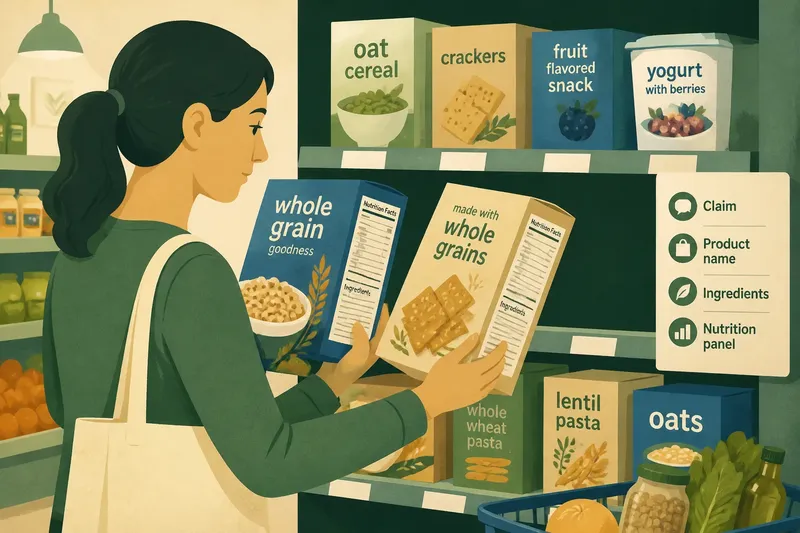
A front-of-pack claim can describe one feature of a food while leaving its full recipe and nutrition profile to the rest of the package. To compare products, read the claim as a starting point, then check the product name, ingredient list, and nutrition panel in a steady order.
What does a front-of-pack claim tell you?
A front-of-pack claim is a short statement designed to draw attention to a product characteristic. Phrases such as “made with whole grains,” “no added sugar,” or “source of fiber” point toward something about the food, but they do not describe every ingredient or explain how the product fits your needs.
Read the wording narrowly. “Made with whole grains” does not say that every grain ingredient is whole, or that whole grains make up most of the product. “No added sugar” does not mean the food contains no sugars naturally present in ingredients such as fruit or milk. A claim may be accurate and still offer only a partial view.
The design can make a claim feel like the main description of the food. Treat it instead as a question to verify elsewhere on the package: Which ingredient provides the feature? How prominent is it in the recipe? What else is included?
Why check the product name after reading the claim?
The product name gives a useful first clue about what the food is, while nearby descriptive wording can clarify its form or flavor. Compare that wording with the claim rather than assuming the claim defines the whole product.
For instance, a package might prominently say “with real fruit” while its product name identifies it as a fruit-flavored snack. The claim tells you that fruit is present; it does not tell you whether the food is mostly fruit, how it is prepared, or what other ingredients shape the product.
Look for wording that identifies the main product, such as “oat cereal,” “vegetable soup,” or “yogurt with berries.” Then notice whether the front also uses terms such as “style,” “flavored,” or “with.” These small distinctions can help separate the food’s basic identity from a feature highlighted for attention.
How can the ingredient list clarify a claim?
The ingredient list names the components used in the food, usually in descending order by weight when they were added. Its first entries therefore offer a useful sense of what forms the recipe, although a list alone does not reveal every detail of sourcing, processing, or the amount of a specific ingredient in the finished serving.
Use the list to connect a claim to its likely source. If the package says “made with oats,” look for oats in the ingredients. If a cereal claims “whole grain,” check whether a whole-grain ingredient appears near the beginning, and look for other grains farther down. Ingredient names can also help explain why a product tastes sweet, salty, rich, or tangy.
Do not treat an unfamiliar ingredient name as proof that the food is unsuitable. Names can describe a functional ingredient, a compound ingredient, or a form of a familiar food. If you need to avoid a particular ingredient for an allergy or another health reason, use the package’s dedicated allergen information and seek qualified guidance when needed.
Imagine you are choosing between two crackers, and one says “made with olive oil.” You check the ingredient lists and see olive oil in both, alongside different other fats and grains. That observation lets you compare the recipes more carefully, but the front claim by itself cannot tell you which cracker better matches your preferences.
What can the nutrition panel add?
The nutrition panel helps answer questions that a short claim cannot. Depending on the food and the panel used in your region, it may list energy, fat, carbohydrates, sugars, fiber, protein, sodium, or other nutrients. It presents these details in a standardized format intended to support comparison.
Check whether the figures are given per serving, per package, or per a stated amount of food. A serving suggestion may differ from the amount you expect to eat, so compare like with like: the same basis on each package. If the package lists more than one column, make sure you are reading the same type of figure for both products.
A claim about one nutrient should not stand in for the whole panel. “Reduced sodium,” for example, is a comparison with a reference product or standard, not a complete account of the food’s nutrients. “High protein” highlights protein, while the rest of the panel may still matter to your decision.
In what order should you compare two packages?
A simple reading order keeps a striking claim from deciding the comparison before you have seen the relevant details:
- Set the purpose. Decide what you are comparing for, such as a preferred ingredient, a nutrient, flavor, or a particular use.
- Read the front claim. Identify exactly what it says, without extending its meaning beyond those words.
- Check the product name. Confirm what kind of food the package identifies and notice any clarifying terms.
- Scan the ingredient list. Look for the ingredient behind the claim and the other components that shape the recipe.
- Compare the nutrition panels. Use the same serving or quantity basis and focus on the nutrients related to your purpose.
- Make the choice in context. Consider taste, intended use, dietary needs, and the information that matters most to you.
Say you are comparing two breakfast cereals because you want one with more whole grains. One front says “whole grain goodness,” while the other says “made with whole grains.” You check the product names, examine where whole-grain ingredients appear in each list, and compare the panels on the same basis. The result is a clearer description of how the packages differ, even if the choice still depends on your taste and priorities.
Which questions help interpret common claims?
Does “no added sugar” mean sugar-free?
No. It addresses whether sugars were added during production, not whether the food contains sugars from ingredients such as fruit or milk. Check the ingredient list and nutrition panel for the fuller picture.
Does “made with whole grains” mean the product is mostly whole grain?
Not by itself. The phrase indicates that whole grains are included, but you need the ingredient list to see their place among the listed ingredients. The claim does not provide a complete recipe breakdown.
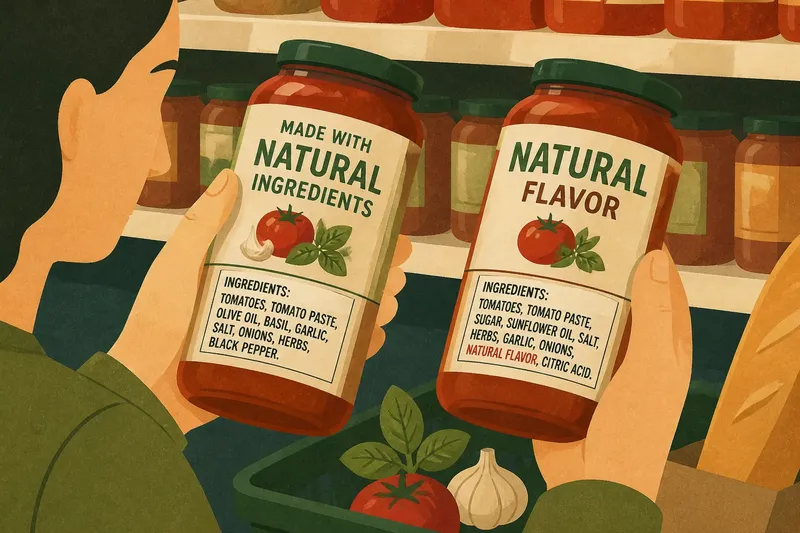
Does “natural” tell me how a food was made?
Not reliably on its own. The word can be used in different ways across products and regions, so it does not replace the ingredient list or a clear description of processing. Read what the package says around it rather than treating it as a full explanation.
Can a nutrition claim tell me whether a food is right for me?
It can help answer a narrow question, but suitability depends on your needs and the whole product. Compare the relevant panel details and ingredients, and consult a qualified professional for health advice that depends on your circumstances.
How should you weigh conflicting signals on the package?
Packages often present several true but different signals: a front claim, a product name, an ingredient list, and nutrition figures. They need not tell the same kind of story. A claim highlights a feature; the list shows what went into the food; the panel organizes selected nutrition information.
When the details seem to pull in different directions, return to your original purpose. If you care about an ingredient, prioritize its place in the list. If you are comparing a nutrient, use the panel on a consistent basis. If flavor or texture matters most, the package may offer clues, but your own preferences remain part of the decision.
For packaged food, the most useful reading habit is simple: take the front claim literally, then let the rest of the label fill in the context. That order makes it easier to compare products without asking a short promotional phrase to answer questions it was never designed to cover.